

Key points:
- ABA therapy strengthens communication, attention, and emotional regulation to build confident school readiness skills before kindergarten and beyond.
- Structured practice supports positive routines, smoother transitions, and effective classroom behavior support in real school settings.
- Families gain guidance in IEP preparation while children develop lasting learning independence across home and school environments.
Starting school is a major milestone for any child, and for children with autism, it can bring both excitement and uncertainty. Families often wonder whether their child will follow routines, communicate needs, and manage the social demands of a busy classroom. Research from national health agencies shows that early, structured behavioral support significantly improves developmental outcomes, especially when started before age five.
Applied Behavior Analysis, or ABA therapy, focuses on teaching meaningful skills in ways children can understand and use in daily life. When thoughtfully designed, it helps children build the foundation needed for academic and social growth. This article explains how ABA therapy supports real classroom readiness, what skills matter most for school success, and how parents can actively support progress at home and during IEP preparation.
Building Strong Foundations Through School Readiness Skills
School success begins long before the first day of class. Children need foundational abilities that allow them to learn, follow directions, and engage with peers. ABA therapy systematically teaches and reinforces these early competencies, known as school readiness skills.
These skills often include:
- Following one and two step instructions
- Sitting and attending during group activities
- Waiting for a turn and sharing materials
- Recognizing letters, numbers, shapes, or colors
- Using simple phrases to request help
National education data consistently shows that early language and self regulation abilities strongly predict later reading and math performance. ABA therapy targets these predictors directly. Rather than assuming a child will “pick it up” naturally, therapists break down each skill into manageable steps. Mastery is built through repetition, reinforcement, and gradual generalization across environments.
Importantly, readiness is not limited to academics. Emotional control, flexibility, and tolerance for change are equally critical. ABA sessions often include structured play, guided transitions, and problem solving exercises that prepare children for the pace and unpredictability of a classroom.
Supporting Positive Classroom Behavior
A busy classroom requires children to manage noise, transitions, peer interactions, and expectations. Without preparation, this environment can feel overwhelming. ABA therapy incorporates proactive classroom behavior support strategies so children are not simply reacting to challenges but are equipped to handle them.
Therapists help children practice:
- Raising a hand before speaking
- Staying seated during instruction
- Transitioning between activities without distress
- Accepting corrections calmly
- Following visual schedules
Data from public education systems shows that children who receive early behavioral interventions demonstrate improved on task behavior and reduced disruptive incidents. ABA programs often simulate classroom routines in therapy sessions. For example, a small group activity may mirror circle time. Snack routines may be used to teach waiting and requesting.
Instead of focusing only on reducing challenging behavior, ABA prioritizes teaching replacement behaviors. A child who once cried to escape a task may learn to request a break appropriately. This shift from reaction to communication is central to effective classroom behavior support.
Parents can reinforce these strategies at home by maintaining predictable routines, using visual cues, and praising positive efforts. Consistency across settings strengthens skill retention.
Strengthening Communication for Academic Participation
Communication is at the heart of learning. Children must understand instructions, ask questions, and interact socially. ABA therapy uses evidence based techniques to build expressive and receptive language.
Skills commonly targeted include:
- Responding to name and simple questions
- Labeling objects and actions
- Using full sentences to express needs
- Initiating conversation with peers
- Understanding classroom vocabulary
Research supported by national institutes highlights that early communication intervention improves long term academic and social outcomes. ABA therapists may use naturalistic teaching strategies, structured instruction, or play based learning depending on the child’s needs.
For non speaking children, alternative communication systems may be introduced. These tools empower children to participate meaningfully in classroom life, which directly supports learning independence.
When children can clearly express discomfort, curiosity, or confusion, they are more likely to stay engaged and less likely to experience frustration.
Promoting Learning Independence
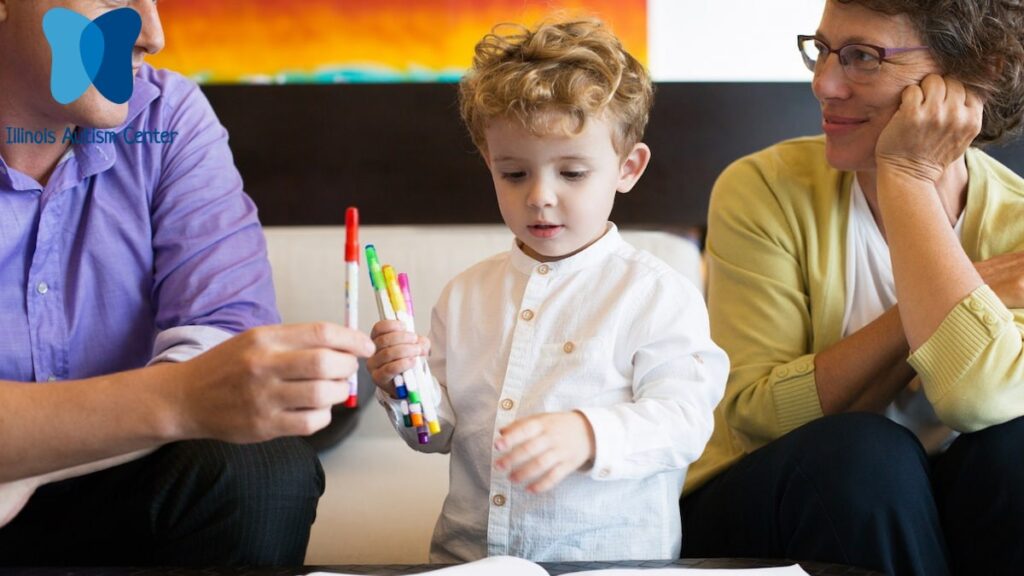
Academic success is not only about mastering content. It is also about self direction and responsibility. ABA therapy emphasizes learning independence by gradually reducing prompts and encouraging self initiated behavior.
Children learn to:
- Begin tasks without constant reminders
- Complete assignments step by step
- Check their own work
- Organize materials
- Ask for clarification appropriately
Independence is built systematically. A therapist may first provide hand over hand assistance, then shift to verbal cues, then fade prompts entirely. Data collection ensures progress is measurable and individualized.
Independence also involves emotional regulation. Children practice coping strategies such as deep breathing, counting, or using visual supports when frustrated. Over time, these tools help them navigate academic challenges without shutting down.
Parents can reinforce independence by encouraging children to complete small daily responsibilities at home, such as putting away toys or choosing clothing for school. Each success builds confidence that carries into the classroom.
Preparing for IEP Meetings With Confidence
Transitioning to school often involves developing an Individualized Education Program. For many families, IEP preparation can feel overwhelming. ABA therapy teams frequently guide parents through this process by identifying clear goals aligned with classroom expectations.
Effective IEP preparation includes:
- Reviewing current skill levels and data
- Identifying academic and behavioral priorities
- Setting measurable objectives
- Planning appropriate supports and accommodations
Federal education guidelines require that IEP goals be specific and measurable. ABA data collection provides objective information that strengthens advocacy. Instead of vague descriptions, parents can share documented progress, frequency counts, or mastery percentages.
Therapists may also collaborate with teachers to ensure continuity between therapy goals and classroom expectations. This collaboration supports smoother transitions and consistent reinforcement of skills.
Families benefit from preparing questions in advance and requesting clarification when needed. Understanding rights and available services empowers parents to make informed decisions for their child.
Generalizing Skills From Therapy to School
One of the most important aspects of ABA therapy is generalization. A skill learned in a quiet therapy room must transfer to a busy classroom. Without intentional planning, children may struggle to apply what they know.
Therapists promote generalization by:
- Practicing skills in multiple settings
- Introducing different instructors and peers
- Varying materials and routines
- Gradually increasing environmental distractions
This process ensures that school readiness skills are functional, not isolated. A child who can follow directions at a therapy table should also follow instructions during art class or recess.
Parents play a critical role in this transfer. Reinforcing the same expectations at home, using similar visual supports, and communicating regularly with educators strengthens consistency.
Supporting Social Confidence and Peer Interaction
School is a social environment. Beyond academics, children must navigate friendships, group work, and playground dynamics. ABA therapy teaches structured social skills that foster confidence.
Children may practice:
- Greeting peers appropriately
- Taking turns during games
- Recognizing emotions in others
- Asking to join activities
- Resolving minor conflicts calmly
Studies in developmental psychology consistently link early social competence with later academic achievement and emotional wellbeing. Social skill instruction within ABA is individualized, often using role play, modeling, and guided practice.
By building both classroom behavior support and social communication, children enter school prepared not only to learn but also to belong.
Addressing Sensory and Environmental Challenges
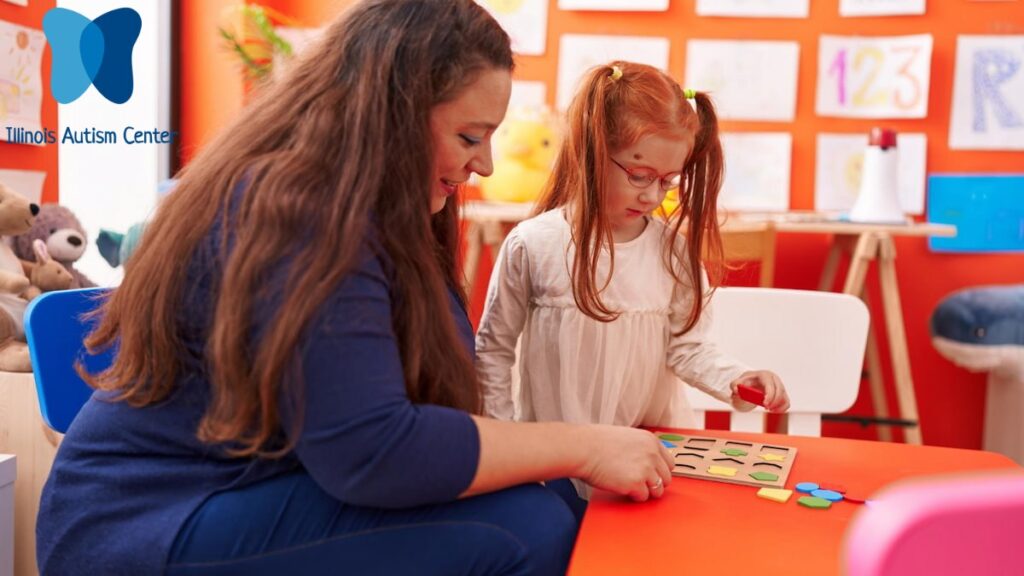
Many children with autism experience sensory sensitivities that affect school participation. Bright lights, loud noises, or crowded spaces may trigger discomfort. ABA therapy addresses these challenges through gradual exposure and coping strategies.
Interventions may include:
- Teaching children to request sensory breaks
- Practicing transitions with countdown warnings
- Using visual schedules to reduce anxiety
- Reinforcing flexible responses to minor changes
Proactive planning reduces the likelihood of overwhelm. When children understand what to expect and have tools to manage discomfort, they are better equipped for sustained learning independence.
Collaboration with educators ensures accommodations are aligned with IEP goals and classroom realities.
Empowering Families as Partners
Parents are central to their child’s success. ABA therapy is most effective when families are active participants. Training sessions often teach parents how to reinforce skills, track progress, and implement consistent routines.
Practical steps families can take include:
- Establishing predictable morning and bedtime routines
- Using visual charts for homework or chores
- Practicing short group style activities at home
- Celebrating small achievements daily
Family involvement strengthens both school readiness skills and long term independence. It also builds trust between home and school environments.
When parents feel informed and supported, they approach school transitions with greater confidence and clarity.
FAQs
At what age should ABA therapy begin for school readiness?
Early intervention, ideally before age five, produces stronger outcomes, though children of any age can benefit from targeted school readiness programs.
How does ABA help with classroom behavior?
It teaches replacement behaviors, structured routines, and coping strategies that support positive participation and effective classroom behavior support.
Can ABA therapy assist with IEP goals?
Yes, therapy data and progress tracking strengthen IEP preparation and help set measurable, realistic educational objectives.
Does ABA only focus on academics?
No, it builds communication, social skills, emotional regulation, and learning independence, all essential for school success.
How can parents reinforce skills at home?
Maintain consistent routines, use visual supports, encourage independence, and collaborate closely with teachers to reinforce progress across settings.
Build the Skills That Make School Days Smoother
Preparation changes how children experience the classroom. Early support focused on school readiness skills helps reduce uncertainty and increase confidence from the first day forward.
At Illinois Autism Center, individualized ABA programs emphasize classroom behavior support, self regulation, and structured learning routines. Clinicians also guide families through IEP preparation so goals align with academic expectations. By strengthening attention, independence, and communication, therapy supports meaningful participation in school settings.
If you want your child to enter the classroom with stronger skills and clearer support, reach out to explore how ABA therapy can lay a steady foundation for school success.