
Key points:
- Social skills groups provide structured peer interaction opportunities that help children practice communication, cooperation, and emotional regulation in real-life settings.
- Guided social development through ABA strategies strengthens confidence, independence, and meaningful friendships over time.
- Group therapy benefits extend beyond sessions, supporting school success, family harmony, and long-term social resilience.
For many children, especially those navigating autism, social situations can feel confusing, overwhelming, or unpredictable. Making friends, joining games, or reading subtle cues may not come naturally. When social challenges repeat, confidence can quietly fade. Parents often see their child wanting connection but not knowing how to reach it.
Social skills groups offer a safe and structured path forward. In a guided small-group setting, children practice communication, problem-solving, and cooperation with peers who share similar experiences. Instead of learning social rules in isolation, they apply them in real time. Research consistently shows that structured peer interaction supports emotional growth and adaptive behavior, especially when grounded in evidence-based approaches such as social development ABA.
This article explains how social skills groups build confidence, strengthen peer relationships, and help children develop practical skills that carry into school, home, and community life.
Why Social Confidence Matters in Childhood
Confidence in social situations affects nearly every part of a child’s daily life. Children who feel comfortable engaging with peers are more likely to:
- Participate in classroom discussions
- Join group activities or sports
- Advocate for their needs
- Build and maintain friendships
- Handle minor conflicts independently
Studies on child development show that early social competence predicts later academic success, emotional well-being, and even employment outcomes. When children struggle socially, they may withdraw, experience anxiety, or become frustrated. Over time, repeated social setbacks can reinforce self-doubt.
For children with autism, peer interaction often requires explicit instruction and guided practice. Subtle cues such as tone of voice, facial expression, and body language may not be intuitive. Social skills groups break these complex behaviors into teachable parts, helping children gain mastery step by step.
Confidence grows when children experience success. A group setting allows them to experience small wins repeatedly, which builds internal belief in their ability to connect.
What Social Skills Groups Actually Look Like
Families sometimes imagine social skills groups as lecture-style lessons about manners. In reality, effective groups are interactive, dynamic, and practical.
A typical session may include:
- Structured greetings and check-ins
- Guided social play skills practice
- Role-playing common scenarios
- Cooperative games that require turn-taking
- Problem-solving activities
- Feedback and reinforcement
The focus is on learning by doing. Children practice initiating conversations, asking to join activities, sharing materials, and navigating disagreements. Facilitators provide real-time coaching, modeling appropriate responses and reinforcing positive attempts.
When grounded in social development ABA principles, instruction is individualized. Goals are measurable and progress is tracked. Skills are broken into manageable steps, practiced repeatedly, and generalized to other settings.
Importantly, children are grouped thoughtfully by age and developmental level. This ensures peer interaction autism supports feel natural rather than forced.
How Guided Peer Interaction Builds Real-World Skills
Social learning happens best in context. A child can memorize a script about introducing themselves, but applying it during recess is different. Social skills groups bridge this gap.
Through guided peer interaction, children learn to:
- Recognize when someone is interested in talking
- Maintain a topic for several exchanges
- Interpret basic emotional cues
- Adjust tone and volume
- Repair misunderstandings
These skills develop through repetition. Research shows that structured group interventions improve social engagement and reciprocal communication in children with autism more effectively than isolated instruction.
The group environment also mirrors real-life unpredictability. Peers respond differently, games evolve, and conversations shift. This variability strengthens flexibility, which is often challenging for autistic children.
Over time, children begin initiating interactions independently. They move from prompted responses to spontaneous communication. That shift marks the beginning of authentic confidence.
The Role of Social Play Skills in Building Confidence
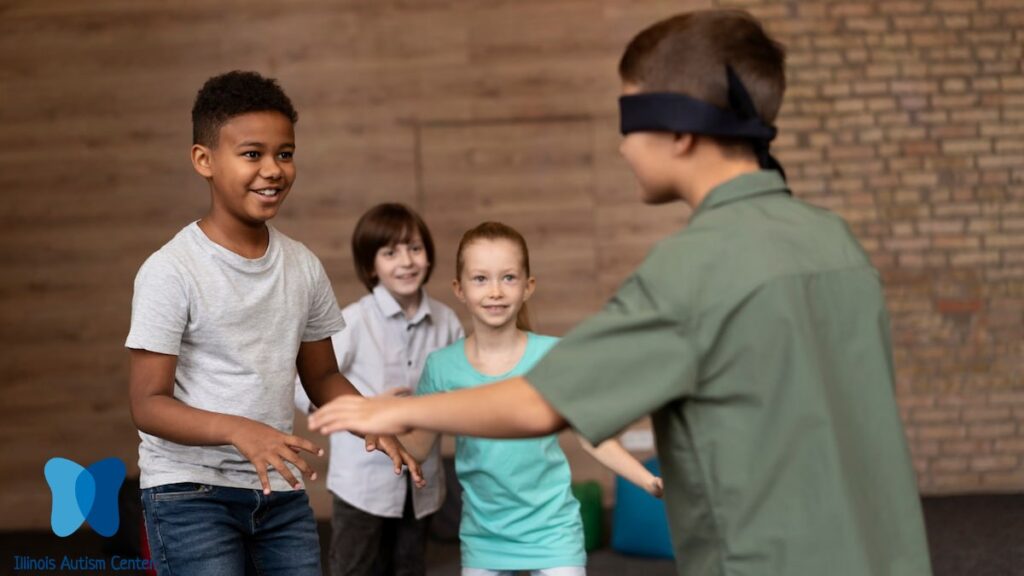
Play is not just recreation. It is one of the primary ways children learn social rules, empathy, and cooperation. However, social play skills do not always develop automatically for children with autism.
In group settings, facilitators intentionally teach:
- Turn-taking in games
- Sharing materials
- Imaginative or pretend play
- Team-based problem solving
- Coping with losing or changes
When children successfully engage in play, they experience belonging. They are no longer observers on the sidelines. Instead, they are participants.
This participation changes how a child views themselves. Rather than thinking, “I do not know how to play,” they begin thinking, “I can join.” That internal shift strengthens self-esteem.
Group therapy benefits become visible when parents notice their child initiating playdates, talking about friends, or recreating group games at home.
Emotional Regulation and Social Growth
Confidence is closely tied to emotional regulation. Social situations can trigger anxiety, frustration, or sensory overload. Social skills groups address these challenges directly.
Children learn strategies such as:
- Recognizing early signs of frustration
- Requesting breaks appropriately
- Using calming techniques
- Accepting feedback without shutting down
In a supportive group, mistakes are normalized. Children see peers also learning and trying. This reduces shame and comparison.
When guided through social development ABA strategies, emotional regulation goals are integrated into social instruction. A child may practice taking turns while also practicing waiting calmly. These layered skills prepare them for school environments where expectations are higher.
As children gain control over their reactions, they feel more capable. That sense of capability fuels confidence.
Long-Term Group Therapy Benefits Beyond the Session
The impact of social skills groups extends beyond the therapy room. Consistent participation can support:
- Improved classroom participation
- Reduced social anxiety
- Stronger sibling relationships
- Increased independence in community settings
Research in child psychology indicates that peer-mediated interventions can lead to lasting improvements in social responsiveness. When children experience positive peer interaction autism support, they are more likely to generalize skills to playgrounds, birthday parties, and extracurricular activities.
Parents often report that after several months of group involvement, their child begins:
- Making eye contact more consistently
- Starting conversations without prompting
- Managing minor conflicts independently
- Showing pride in social accomplishments
These are not small changes. They represent a shift in how a child experiences the world.
How Parents Can Reinforce Skills at Home
Social growth accelerates when families reinforce learning outside of sessions. You do not need specialized training to help your child build confidence.
Simple strategies include:
- Practicing greetings during family gatherings
- Arranging short, structured playdates
- Role-playing common school scenarios
- Praising effort, not just success
- Modeling flexible thinking aloud
Consistency matters. When children receive the same expectations and encouragement across settings, skills solidify faster.
It is also important to celebrate progress, even if it feels incremental. Joining a group activity for five minutes may be a major milestone. Confidence builds through accumulated small victories.
Choosing the Right Social Skills Group
Not all groups are the same. Families should look for programs that:
- Use evidence-based methods such as social development ABA
- Maintain small, balanced group sizes
- Offer clear, measurable goals
- Provide regular progress updates
- Encourage parent involvement
Ask how peer interaction opportunities are structured and how facilitators handle conflicts. Effective programs do not simply supervise children. They actively teach, coach, and reinforce skills.
Age appropriateness also matters. Teen groups may focus more on conversation depth and perspective-taking, while younger groups emphasize social play skills and basic turn-taking.
When the structure fits your child’s needs, growth feels achievable rather than overwhelming.
Signs Your Child May Benefit from a Social Skills Group
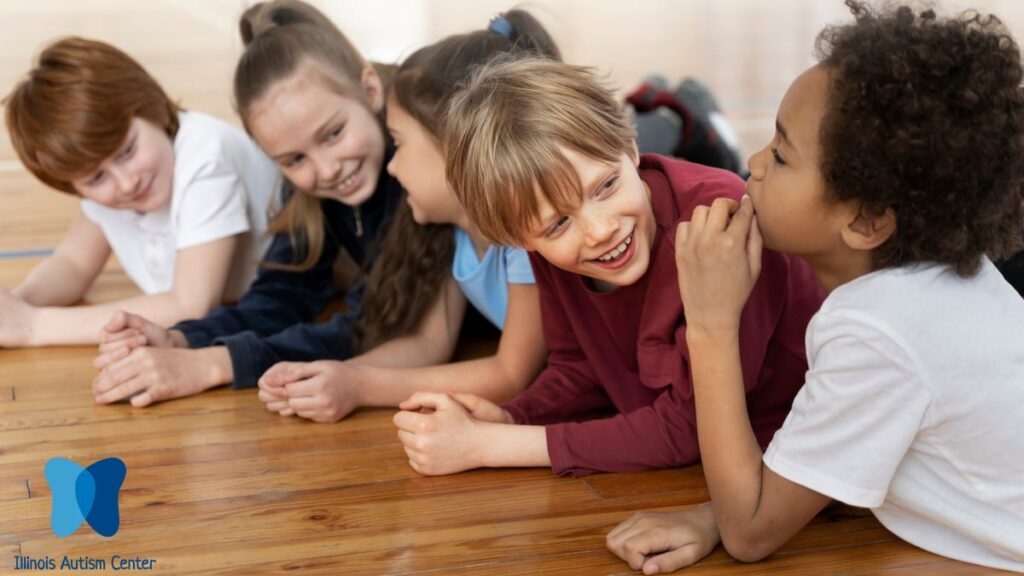
Some children clearly express loneliness or frustration. Others show subtler signs. Consider a group if your child:
- Struggles to make or keep friends
- Avoids group activities
- Frequently misunderstands social cues
- Becomes upset during peer conflicts
- Prefers interacting with adults over children
Early support is powerful. Addressing social challenges in childhood can prevent secondary issues such as anxiety or low self-esteem later.
Remember, seeking support is not a sign of failure. It is a proactive step toward helping your child experience connection and belonging.
Frequently Asked Questions
How long does it take to see progress in a social skills group?
Many families notice small improvements within eight to twelve weeks. Meaningful, lasting confidence often develops over several months of consistent participation and reinforcement at home.
Are social skills groups only for children with autism?
No. While peer interaction autism support is common, children with ADHD, social anxiety, or mild communication delays also benefit from structured group therapy experiences.
How are goals measured in social development ABA groups?
Progress is tracked through observable behaviors such as initiating conversations, maintaining eye contact, or participating in cooperative play. Data helps ensure growth is steady and personalized.
What if my child feels nervous about joining a group?
Initial anxiety is common. Supportive facilitators gradually introduce participation, allowing observation first. As children experience positive interactions, comfort and confidence naturally increase.
Can social play skills learned in groups transfer to school?
Yes. With guided practice and parent reinforcement, children often generalize skills to classrooms, playgrounds, and extracurricular activities, strengthening overall social independence.
Help Your Child Step Into Social Moments With Confidence
Confidence grows when children have safe spaces to practice social interaction. Group therapy benefits extend beyond structured sessions, helping children generalize skills into school and community settings.
Illinois Autism Center offers social development ABA programs that focus on peer interaction for children with autism in small, guided groups. Clinicians model appropriate communication, reinforce positive engagement, and coach children through real social scenarios. Families receive insight into how to continue supporting these skills outside of therapy.
If your child is ready to build stronger connections and feel more comfortable with peers, contact our team to learn how social skills groups can create lasting confidence.