

Key points:
- ABA therapy for toddlers focuses on communication, behavior, play, and independence during critical early developmental windows.
- Progress is gradual and measurable, often seen in small daily gains rather than dramatic overnight changes.
- Early progress tracking helps families understand growth patterns and adjust toddler ABA goals effectively.
When your toddler begins ABA therapy, one of the first questions that naturally follows is, “What should progress look like?” For many families, especially those navigating developmental milestones in autism, the path forward can feel uncertain. You want reassurance that the effort, time, and emotional investment are leading somewhere meaningful.
Early childhood is a powerful window for growth. Research consistently shows that intervention before age three can significantly improve communication, adaptive skills, and long term outcomes. Yet progress in toddlers rarely appears as a dramatic leap. Instead, it unfolds in small, steady steps that build over time.
This article explains what realistic progress looks like in ABA therapy for toddlers, how toddler ABA goals are set, and how early progress tracking helps families see meaningful change. You will leave with clarity, confidence, and practical insight into what growth truly means at this stage.
Why Early Intervention Matters for Toddlers
The first three years of life are marked by rapid brain development. Neural pathways responsible for language, social engagement, and self regulation are especially adaptable during this period. When intervention begins early, learning can align with natural developmental processes.
For toddlers showing delays in communication, play, or social interaction, early therapy can:
- Increase spoken language or functional communication
- Improve joint attention and eye contact
- Reduce repetitive behaviors that interfere with learning
- Strengthen daily living skills such as feeding and dressing
Understanding developmental milestones in autism is essential. Some toddlers may meet certain motor milestones on time but struggle with social engagement or symbolic play. ABA therapy focuses on closing those gaps in a structured and supportive way.
Progress during this stage is not about rushing development. It is about helping a child build foundational skills that support lifelong learning.
How Toddler ABA Goals Are Created
Effective toddler ABA goals are individualized. They are based on assessment of current strengths, delays, and family priorities. Goals are typically broken into small, measurable objectives so progress can be clearly observed.
Common focus areas include:
- Functional communication, such as pointing, signing, or using simple words
- Responding to name
- Following simple one step directions
- Playing appropriately with toys
- Imitating sounds or actions
- Tolerating transitions
A toddler may begin therapy without spoken words. A realistic early goal might be requesting a favorite snack using a gesture or picture. Once that skill becomes consistent, the next step may be pairing the request with a sound or word.
Progress often follows a sequence. For example:
- Looking at a parent when their name is called
- Turning toward the speaker
- Responding consistently in multiple environments
Each small step matters. When goals are clear and measurable, early progress tracking becomes meaningful and motivating for families.
What Early Progress Typically Looks Like
Progress in ABA therapy for toddlers is often subtle at first. Instead of dramatic transformation, you may notice:
- Longer attention during play
- Fewer tantrums during transitions
- Increased eye contact
- More attempts to communicate
Early gains often involve regulation. A toddler who previously cried for twenty minutes during a transition may calm within five minutes. That is real progress.
Communication progress may look like:
- Moving from crying to pointing
- Using a single word consistently
- Imitating simple sounds
- Combining two words
Social progress may include:
- Bringing a toy to share
- Smiling in response to interaction
- Participating in simple back and forth games
Families sometimes expect visible leaps within weeks. While some toddlers show rapid growth, most experience steady, layered improvement. Early progress tracking helps you recognize these meaningful shifts, even when they feel small.
Communication Growth in Toddlers

Communication is often a primary focus in early therapy. Many toddlers receiving ABA are minimally verbal or nonverbal. Progress in this area can be transformative.
Initial steps might include:
- Making eye contact to request
- Reaching for desired objects
- Using picture exchange systems
- Producing approximations of words
Over time, these skills can expand into:
- Naming familiar objects
- Answering simple questions
- Following two step directions
- Using short phrases
It is important to remember that communication includes more than speech. Gestures, signs, and visual support are valid and effective tools. Building functional communication reduces frustration and often leads to decreased challenging behavior.
When reviewing developmental milestones in autism, communication gains are often the most noticeable and rewarding for families.
Social and Play Development
Toddlers learn through play. ABA therapy integrates structured and naturalistic play to build social understanding.
Early social progress may look like:
- Tolerating another child nearby
- Engaging in parallel play
- Taking turns with assistance
- Imitating simple actions like clapping
Later stages may include:
- Pretend play with dolls or cars
- Initiating simple games
- Responding to social cues
For some toddlers, simply sitting next to a peer calmly is a milestone. Social growth takes time and repetition. Consistent exposure to guided interaction helps toddlers understand shared experiences.
Play based learning also strengthens cognitive skills. Sorting, matching, and problem solving tasks may be embedded into games to support overall development.
Behavior and Emotional Regulation
Many families seek ABA because of challenging behaviors such as tantrums, aggression, or self injury. In toddlers, these behaviors often stem from limited communication or difficulty regulating emotions.
Progress in this area may include:
- Shorter duration of meltdowns
- Increased ability to wait briefly
- Using a replacement behavior such as asking for help
- Improved tolerance of changes in routine
Emotional regulation develops gradually. Toddlers are still learning how to manage frustration. Therapy supports this growth by teaching coping strategies and reinforcing calm responses.
Early progress tracking in behavior focuses on frequency, intensity, and duration. For example, a reduction from five daily meltdowns to two is significant. Even if challenges remain, measurable improvement signals positive direction.
Adaptive and Daily Living Skills
Independence is a critical long term goal. Even small daily living skills build confidence.
For toddlers, adaptive goals may include:
- Feeding self with a spoon
- Drinking from an open cup
- Washing hands with assistance
- Putting on simple clothing items
- Sitting at the table during meals
Progress might appear as partial independence at first. A child may pull up their pants but need help fastening them. These steps are part of skill building.
Strengthening adaptive skills early supports smoother transitions into preschool settings and community environments.
How Early Progress Tracking Works
Families often wonder how professionals measure change. Early progress tracking uses data collected during sessions to monitor skill acquisition and behavior patterns.
This may involve:
- Recording correct responses during learning trials
- Tracking spontaneous communication attempts
- Monitoring behavior frequency
- Reviewing mastery of goals over time
Parents benefit from asking for clear explanations of progress charts. When you understand what is being measured, you can better see growth trends.
Progress tracking is not about perfection. It is about patterns. A steady upward trend, even with occasional dips, indicates learning. Adjustments are made when progress stalls, ensuring toddler ABA goals remain appropriate and achievable.
What Influences the Pace of Progress
Every toddler develops at a unique pace. Several factors influence growth, including:
- Age at intervention start
- Baseline skill level
- Consistency of therapy
- Family involvement
- Co occurring medical or developmental conditions
Family participation significantly impacts outcomes. Practicing skills during daily routines reinforces learning and speeds generalization.
It is also important to maintain realistic expectations. Developmental milestones in autism may not follow typical timelines. Progress is best measured against the child’s own starting point rather than peer comparisons.
Consistency and patience are key. Gains that seem small today often become the foundation for larger breakthroughs later.
Supporting Progress at Home
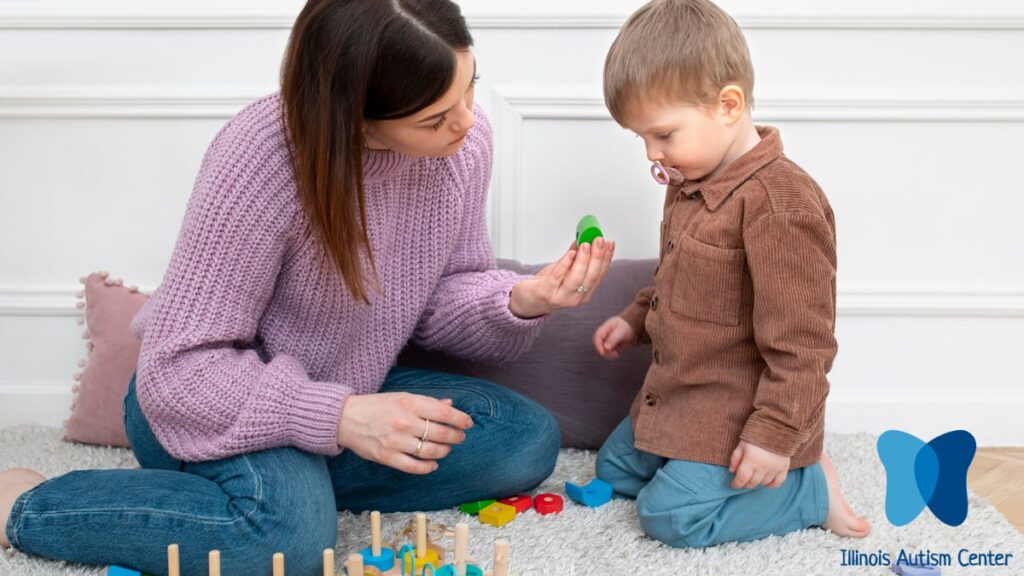
Parents play a central role in maximizing therapy outcomes. Simple strategies can reinforce learning outside sessions.
You can support progress by:
- Offering choices to encourage communication
- Pausing briefly to allow your child to request
- Using clear and simple language
- Praising attempts, not just perfect responses
- Keeping routines predictable
Embedding toddler ABA goals into everyday life makes learning natural. Mealtime, bath time, and playtime are all opportunities for practice.
Tracking small wins in a journal can also boost morale. When progress feels slow, reviewing earlier milestones can remind you how far your child has come.
When to Adjust Expectations
Sometimes progress plateaus. This does not mean therapy is failing. It may indicate the need to adjust strategies or goals.
Signs that goals may need revision include:
- Consistent lack of improvement over several weeks
- Increased frustration during sessions
- Skills not transferring to home or community settings
Open communication with your therapy team ensures alignment. Revisiting early progress tracking data can reveal patterns and guide next steps.
Remember that growth is rarely linear. Temporary setbacks often precede significant gains.
Frequently Asked Questions
How long does it take to see progress in ABA therapy for toddlers?
Some families notice small changes within weeks, such as improved eye contact or reduced tantrums. Meaningful skill development typically becomes clearer after several months of consistent intervention.
What if my toddler is not speaking yet?
Speech is only one form of communication. ABA focuses on building functional communication through gestures, pictures, or sounds first, which often supports later spoken language development.
How are developmental milestones in autism different?
Children with autism may reach motor milestones on time but show delays in social communication, play, or joint attention. Therapy targets those specific developmental differences.
Is regression normal during therapy?
Temporary regression can happen during growth spurts or routine changes. Reviewing early progress tracking data helps determine whether adjustments are needed or if the change is short term.
How can I tell if toddler ABA goals are appropriate?
Goals should be specific, measurable, and meaningful to your family. You should clearly understand what skill is being taught and how progress will be tracked.
Start Early, Track Progress, and Strengthen Every Small Gain
Early intervention works best when goals are clear and progress is consistently measured. Focused support during the toddler years builds skills while development is still highly flexible.
At Illinois Autism Center, individualized ABA therapy for toddlers targets age appropriate developmental milestones for autism, emphasizing communication, play, and daily living skills. Clinicians use structured data collection and early progress tracking to adjust goals and ensure steady growth. Families remain active partners throughout the process.
If you are considering early support and want a clearer picture of what progress can look like, contact our team to learn how tailored toddler ABA programs can nurture meaningful development from the start.